
Choosing among the 7 Best Double Sliding Patio Doors for Energy Efficiency requires more than comparing glass thickness or frame color. Energy performance depends on the entire door system, including glazing, seals, rollers, tracks, frame materials, and installation quality. A beautiful door can still create a cold draft beside the sofa.
Building-science expert Dr. Joseph Lstiburek famously explains, “A window is a hole in the wall.” The same principle applies to patio doors. Double sliding patio doors create a wide opening, so small sealing weaknesses can affect comfort, heating costs, and moisture control. Look for tested U-factor, solar heat gain coefficient, and air-leakage ratings. NFRC-certified information offers a more dependable comparison than marketing language alone.
Real-world performance can be less perfect. Even a highly rated door may underperform when the sill is poorly flashed or the frame is incorrectly shimmed. A low U-factor helps, but it does not solve every problem. Orientation matters too. South- and west-facing glass may increase unwanted summer heat, especially without exterior shading.
This guide examines seven strong options for different climates, budgets, and renovation goals. It considers insulated frames, low-emissivity coatings, multi-point weather seals, and smooth daily operation. The best choice is not always the most expensive model. Sometimes, careful installation delivers the bigger improvement. That detail is easy to overlook.
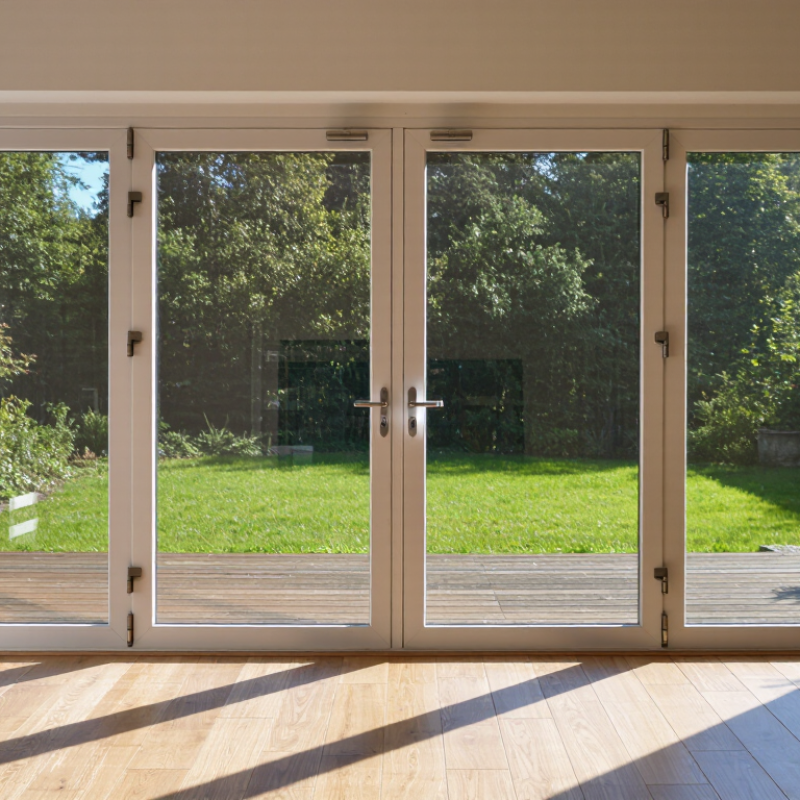
Double sliding patio doors become energy efficient through several coordinated details. The glass matters, but it is not the whole story. Low-emissivity coatings reflect indoor heat during winter and reduce solar gain. Insulated glass units, often filled with argon, create a slower path for heat transfer. Warm-edge spacers further reduce condensation near the glass edges.
The U.S. Department of Energy estimates that windows and other glazed openings can cause 25–30% of residential heating and cooling energy use. A sliding door can contribute noticeably, especially when its rollers, tracks, or meeting rails are poorly sealed. Check the National Fenestration Rating Council label for U-factor, solar heat gain coefficient, visible transmittance, and air leakage. Lower U-factor usually means better insulation. In hot climates, a lower SHGC can reduce unwanted afternoon heat. Climate still matters. One specification does not fit every home.
Tips: Choose thermally improved frames, continuous weatherstripping, and a tightly sealed sill pan. Ask for installation details, not only impressive glass numbers. A door may perform well in a laboratory but disappoint beside a warped wall. Keep the track clean, inspect seals each season, and avoid forcing stiff rollers. Small gaps become expensive over time. Sometimes, the installation is the weak point.
Double sliding patio doors can brighten a room, but their glass area also increases heat transfer. The U.S. Department of Energy reports that windows may cause 25–30% of residential heating and cooling energy use. Performance details deserve careful comparison.
Start with the NFRC label. A lower U-factor indicates better insulation, while the solar heat gain coefficient shows how much sunlight enters. In hot climates, a lower SHGC can reduce cooling demand. In colder regions, moderate solar gain may help warm interiors. Balance matters. Low-emissivity coatings, insulated glass, and argon filling can improve thermal performance. However, the frame is equally important. Fiberglass, vinyl, and thermally improved aluminum designs behave differently at the edges. Check the air-leakage rating, too. Small leaks become noticeable around a wide sliding opening. The U.S. Department of Energy recommends examining weatherstripping, interlocking meeting rails, and well-fitted thresholds.
Operation affects efficiency. Rollers should move smoothly without forcing the panels, because rough movement can damage seals. Water-resistance testing is also valuable in windy, rainy locations. ENERGY STAR and NFRC ratings provide useful benchmarks, but labels cannot correct poor installation. A highly rated door may perform badly if the opening is uneven or flashing is incomplete. That is the uncomfortable part. Specifications matter, yet installation often decides the result. Ask for documented test ratings, climate-appropriate values, and an installation method suited to the wall system.
Seven Energy-Efficient Double Sliding Patio Door Options
Choosing an efficient double sliding patio door starts with the glass, frame, and installation quality. Low-emissivity double glazing helps reduce winter heat loss and summer heat gain. A thermally broken aluminum frame can limit cold transfer around the edges. Vinyl frames usually provide strong insulation with limited maintenance. Fiberglass offers stability during temperature changes. Wood-clad designs add warmth, but they need careful moisture protection.
Other useful options include doors with argon-filled glass, warm-edge spacers, and multi-point locking systems. These features can improve comfort near the opening. A triple-track design may support wider openings, although it can cost more and require precise alignment. Large glass panels bring daylight inside, but they can also increase solar heat gain. Choose low solar-control glass for bright, warm rooms. Choose clearer glass where winter sunlight is valuable.
Tips: Check the whole assembly, not only the glass. Look for tested U-factor and solar heat gain ratings. Inspect weatherstripping for a continuous seal, especially at the meeting rails. Measure the opening twice. Small errors matter. Professional installation is often worth the expense because a well-rated door can still leak air when the sill is poorly sealed. I have seen homeowners focus on attractive frames while overlooking drainage channels. That mistake can lead to drafts, condensation, and difficult operation. Maintenance also matters; keep tracks clean and replace compressed seals when needed.
| No. | Door Configuration | Glazing Package | Frame and Spacer Features | Typical U-Factor (Btu/h·ft²·°F) |
Typical SHGC | Air Leakage Target (cfm/ft²) |
Best Energy-Efficiency Application |
|---|---|---|---|---|---|---|---|
| 1 | Double Sliding Door with Low-E Glass | Dual-pane, argon-filled insulating glass with a low-emissivity coating | Thermally improved vinyl or fiberglass frame; warm-edge spacer; compression weatherstripping | 0.27–0.30 | 0.25–0.35 | ≤ 0.30 | A balanced choice for mixed climates where moderate insulation and solar control are required. |
| 2 | Double Sliding Door with Solar-Control Low-E Glass | Dual-pane, argon-filled glass with spectrally selective low-E coating | Insulated frame, warm-edge spacer, multi-point interlocking meeting stile, and adjustable rollers | 0.25–0.28 | 0.18–0.25 | ≤ 0.25 | Hot or sunny climates where reducing solar heat gain and cooling demand is a priority. |
| 3 | Triple-Glass Double Sliding Patio Door | Triple-pane, argon-filled insulating glass with two low-E coatings | Thermally broken frame, insulated sash, warm-edge spacer, and continuous perimeter seals | 0.18–0.23 | 0.20–0.35 | ≤ 0.20 | Cold climates where lower conductive heat loss and improved interior comfort are most important. |
| 4 | Fiberglass-Frame Double Sliding Door | Dual-pane, argon-filled low-E glass | Low-conductivity fiberglass frame, reinforced sash, insulated sill, and durable compression seals | 0.24–0.28 | 0.25–0.35 | ≤ 0.25 | Homes seeking stable thermal performance with minimal frame expansion and contraction. |
| 5 | Thermally Broken Aluminum Double Slider | Dual-pane, argon-filled low-E glass | Polyamide thermal break, insulated sill, thermally improved meeting stile, and multi-fin seals | 0.28–0.32 | 0.25–0.35 | ≤ 0.30 | Modern architectural projects that require narrow sightlines while limiting metal-frame heat transfer. |
| 6 | High-Solar-Gain Double Sliding Door | Dual-pane, argon-filled low-E glass with a higher solar heat-gain coefficient | Insulated vinyl, fiberglass, or thermally improved composite frame; warm-edge spacer and tight seals | 0.24–0.28 | 0.35–0.45 | ≤ 0.25 | Passive-solar designs and heating-dominated climates with well-oriented south-facing glazing. |
| 7 | Insulated Composite-Frame Double Slider | Dual-pane or triple-pane argon-filled low-E glass, selected according to climate | Multi-chamber composite frame, insulated sill, warm-edge spacer, multi-point lock, and replaceable seals | 0.20–0.27 | 0.20–0.35 | ≤ 0.20 | High-performance renovations requiring a strong balance of insulation, airtightness, and durability. |
Double sliding patio doors can save energy, but their performance depends on more than attractive glass. During site checks, I examine the center meeting rail, corners, and lower track for cold drafts. Small details matter. Double or triple glazing improves insulation, while low-emissivity coatings help control heat transfer. Warm-edge spacers can reduce condensation around the glass perimeter. Argon or other inert gas fills may help, but damaged seals can slowly reduce their benefit.
Frame material also deserves close attention. Thermally broken aluminum limits heat movement through the frame. Vinyl and fiberglass frames usually provide strong insulation, though their quality varies. Check whether the frame feels rigid and operates without lifting or scraping. Run a hand near closed seals on a windy day. A weak seal becomes obvious. I once focused too heavily on glass ratings and overlooked a poorly aligned meeting rail. That mistake changed my inspection routine.
Compare the U-factor, solar heat gain coefficient, and air-leakage rating on certified performance labels. A lower U-factor generally indicates better insulation. SHGC should match the local climate and window exposure. South- or west-facing doors may need a lower rating in hot regions. Installation remains critical. Even excellent glass performs poorly when the opening is uneven or foam gaps surround the frame. Ask for documented testing, warranty terms, and details about replacement seals. Ratings help, but real comfort depends on the entire door assembly.
Double sliding patio doors can improve comfort, but installation determines much of their energy performance. A skilled installer should measure the opening at several points, not just across the top. Small differences can create uneven gaps and air leakage. The frame must sit square, level, and firmly supported. Insulated shims help prevent movement over time. Low-expansion foam can seal hidden spaces without distorting the frame. I once saw a door installed slightly out of level. It looked acceptable, yet one panel dragged and left a cold draft.
Glass selection matters, but sealing deserves equal attention. Energy-efficient glazing performs poorly when weatherstripping is compressed incorrectly. Installers should check the sill drainage path and confirm that weep holes remain open. Exterior sealant needs a continuous bead, especially at corner joints. Maintenance should include cleaning the track with a soft brush and checking rollers for wear. Avoid forcing a stiff panel. That can damage alignment. Inspect seals twice yearly, particularly after extreme heat, heavy rain, or freezing temperatures. My own maintenance routine has not always been perfect; missed inspections allowed one brittle seal to worsen.
Tips: Close each panel slowly and feel for resistance. Hold a tissue near the frame on a windy day. Movement may reveal air leakage. Replace cracked weatherstripping promptly. Keep furniture away from the sill so drainage remains visible. Ask a qualified professional to adjust rollers, inspect fasteners, and verify the door closes evenly. Small corrections can protect heating and cooling savings.