

How to Choose the Best Inflatable Dome Supplier in China?

Choosing the right Inflatable Dome supplier in China requires more than comparing glossy photos and factory prices. The real decision involves engineering, material traceability, safety documentation, production control, and after-sales support. A dome may look impressive under exhibition lights, yet fail when seams, anchors, ventilation, or inflation systems are poorly specified.

Market reports show why supplier selection matters. UFI’s Global Exhibition Barometer has recorded continued recovery in international exhibitions, increasing demand for flexible temporary venues. The American Rental Association’s industry forecasts also reflect strong demand for rental-ready equipment and event infrastructure in North America. Meanwhile, Grand View Research and related outdoor-recreation studies identify continued interest in portable leisure and experiential spaces. These trends create opportunity, but they also attract inexperienced manufacturers.

Quality differences are often hidden.

A reliable supplier should provide fabric specifications, coating details, fire-performance evidence, structural calculations, and clear warranty terms. Ask whether the factory performs seam-strength testing, air-leak testing, blower endurance checks, and complete pre-shipment inspections. Request dated production photographs, not only showroom images. Confirm whether replacement blowers, valves, zippers, and repair kits are available locally or shipped internationally.

Price deserves careful attention. A lower quotation may exclude anchoring systems, transport packaging, installation guidance, or certification support. That omission can become expensive during a live event. Supplier audits, third-party inspections, and sample approval reduce this risk. However, no checklist is perfect. Real weather exposure may reveal weaknesses that laboratory documents cannot show. The best choice balances verified engineering, responsive communication, realistic lead times, and evidence from comparable projects.
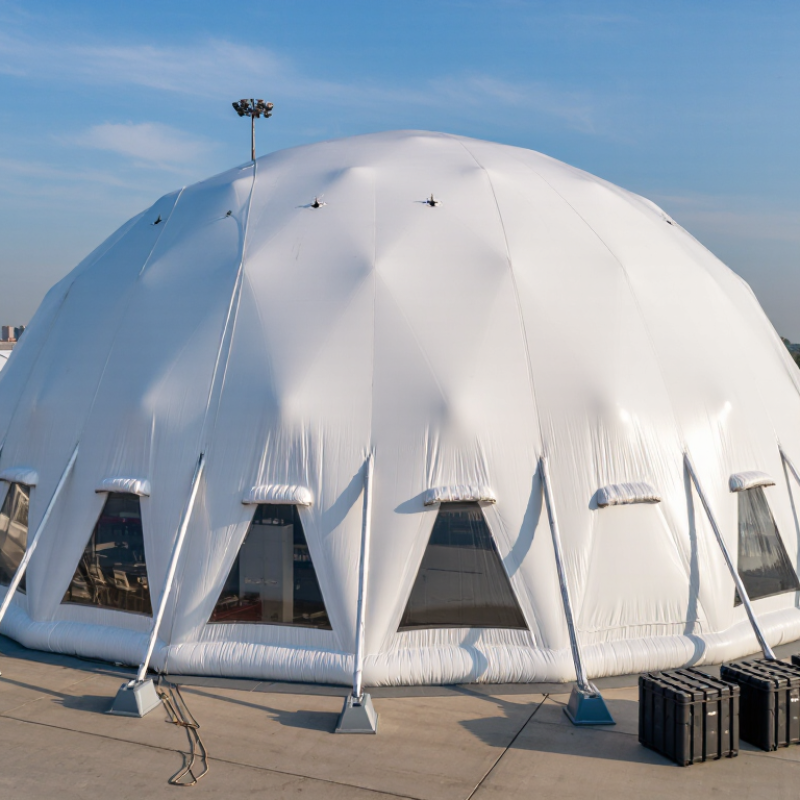
How to Choose the Best Inflatable Dome Supplier in China?

Define Your Inflatable Dome Requirements and Project Goals

Define your inflatable dome requirements before comparing suppliers. Clarify its purpose, location, operating season, and expected lifespan. A sports venue needs different airflow and clearance than a temporary exhibition space. Record the internal diameter, usable floor area, entrance size, seating plan, and peak occupancy. Include local wind, rain, snow, temperature, and ground conditions. Do not rely on a supplier’s standard size. It may create expensive redesigns later.

Energy performance should be a project goal, not an afterthought. The 2023 Global Status Report for Buildings and Construction, published by UNEP and GlobalABC, states that building operations use about 30% of global final energy. Ask suppliers for blower power, insulation performance, ventilation rates, backup systems, and expected operating costs. The IEA also identifies buildings as a major efficiency opportunity. These figures make lifecycle cost important. A cheaper membrane may not be cheaper after five years.

Tips: Prepare a one-page requirement sheet. Show a simple site sketch. Request wind and snow calculations, material test reports, fire-performance evidence, installation procedures, warranty terms, and maintenance schedules. Check whether the supplier can provide local service. Ask for references with similar climates. A perfect brief is rarely possible. Leave realistic tolerance ranges for capacity and budget. I have seen projects focus too heavily on appearance, then struggle with access, drainage, or emergency power. That mistake is easy to prevent.

Assess Supplier Experience, Manufacturing Capacity, and Certifications

How to Choose the Best Inflatable Dome Supplier in China?

Assess Supplier Experience, Manufacturing Capacity, and Certifications

An inflatable dome supplier should show more than attractive photos. Ask how many years the team has served similar projects. Request case details, installation dates, and client references. A supplier experienced in sports halls should explain anchoring, airflow, emergency exits, and local weather conditions. Speak with previous clients when possible. Small details reveal real experience.

Manufacturing capacity matters when deadlines are tight. Visit the factory or request a live video inspection. Observe cutting tables, welding stations, storage areas, and quality records. Confirm daily output, material stock, spare blowers, and backup power plans. Request a sample seam and inspect its stitching, coating, and strength.

A large workshop is not automatically reliable. One practical lesson is uncomfortable: impressive facilities can still have weak communication between design and production. A small test order may expose that risk.

Certifications need careful verification. Request current copies and check the certificate holder, product model, material, and issuing body. Review fabric fire performance, blower electrical safety, structural calculations, and quality-management systems where relevant. Requirements differ by installation country and intended use.

Independent testing is stronger than a self-written compliance statement. Confirm test dates and scopes directly with the issuer when possible. Certificates can expire. Even experienced buyers sometimes overlook this detail.

Compare Dome Materials, Design Options, and Customization Services

Choosing a Chinese inflatable dome supplier starts with material evidence, not glossy renderings.

PVC-coated polyester is common because it balances tear strength, weldability, and cost. TPU offers better flexibility and lower-temperature performance, but usually costs more.

Ask for fabric weight, tensile strength, coating thickness, flame-retardant test results, and UV-aging data. ISO 4892-3 testing is useful for comparing outdoor color and strength retention.

“Outdoor” is not a specification.

Design should match the site and operating routine.

A 12-meter dome needs more than attractive geometry; it needs clear emergency exits, anchoring calculations, ventilation, lighting access, and safe cable routes.

The 2024 Global Status Report for Buildings and Construction reports that buildings consume about 32% of global energy and produce roughly 34% of global CO2 emissions.

A supplier should therefore explain blower efficiency, insulation layers, and expected operating hours. Request wind-load assumptions in writing.

A beautiful dome can still perform poorly in heat, rain, or dust.

Customization separates a factory from a reseller.

Provide a measured layout, door positions, logo files, internal equipment, and delivery conditions. Require CAD drawings, a material sample, seam photos, inspection records, and a trial inflation video before payment.

TÜV, SGS, or equivalent inspection documentation can improve traceability, but certificates must match the actual fabric and project.

One weak point remains: customized colors may age differently across panels. Test them together.

Also check repair kits, spare blowers, warranty limits, and response time. Cheap quotations often exclude installation engineering.

That omission becomes expensive later.

Verify Product Quality, Safety Standards, and Testing Procedures

When choosing an inflatable dome supplier in China, inspect quality evidence before discussing price. Request material specifications, production photos, and a complete testing record. The fabric should have stable thickness, strong welded seams, and clear resistance to tearing, UV exposure, and flame spread. Ask which standards apply to your dome’s use and destination market. Safety requirements may differ for exhibitions, sports facilities, and public entertainment spaces.

Demand reports from independent laboratories accredited to ISO/IEC 17025. Check the report number, test date, sample description, and matching material batch. A serious supplier should demonstrate seam-strength testing, air-pressure stability, blower performance, anchoring resistance, and emergency deflation procedures. Ask for a short video showing pressure alarms and backup systems operating. Small details matter. Confirm that exits open quickly from inside, even when power fails. Review the installation manual, inspection checklist, maintenance schedule, and replacement-part process.

Do not accept a certificate alone. Certificates can describe an earlier sample, not your finished order. Request a pre-shipment inspection and retain approved material samples. If possible, arrange a factory visit or live video inspection during welding and final assembly. One practical mistake is trusting polished photos too early. I would also question unclear test dates and vague claims such as “international standard.” A reliable supplier explains limits honestly, including weather restrictions and expected service life. That transparency is useful, even when the answer is inconvenient.

Evaluate Pricing, Delivery Terms, Installation Support, and After-Sales Service

How to Choose the Best Inflatable Dome Supplier in China?

Price is only a starting point when selecting an inflatable dome supplier. Ask for a detailed quotation covering fabric grade, dimensions, air equipment, packing, taxes, and shipping. A cheaper offer may exclude installation tools or replacement parts. Request clear payment stages, currency terms, and costs for design changes. In practical procurement, hidden charges often appear after the contract is signed. Ask for details.

Delivery terms deserve equal attention. Confirm production time, inspection arrangements, port handling, and the exact shipping responsibility under the agreed trade terms. A reliable supplier should provide production photos, packing lists, and tracking information. Require written procedures for delays, damaged cartons, or missing components. One overlooked detail can postpone an entire site opening.

Installation support can reduce expensive mistakes. Look for numbered components, illustrated drawings, video guidance, and remote technical assistance during assembly. For larger domes, ask whether trained technicians can support installation and what travel costs apply. After-sales service should include warranty coverage, response times, spare-air-equipment availability, and a clear repair process. Test their communication before ordering by sending several technical questions. Slow replies during evaluation may become slower after payment. Nothing stays perfect. A dependable supplier admits limitations, records issues, and offers practical corrections instead of making vague promises. Check customer references, factory quality procedures, and pre-shipment inspection options before committing.

Go to Top