

How to Source Custom Soap Dish Holders from China?

Sourcing a custom soap dish from China can look simple. It is not. Small design choices affect drainage, durability, packaging, and customer satisfaction. The keyword Soap Dish Holder Custom China often leads buyers toward many factories, but not every supplier offers genuine customization.

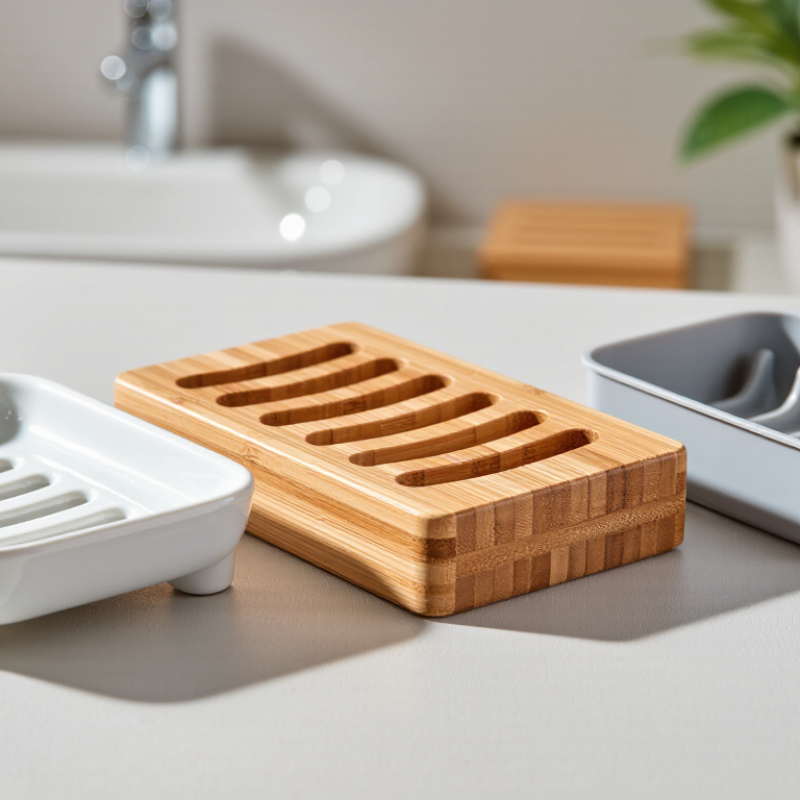
Chen Wei, a China-based bathroom accessory sourcing consultant, says, “A good soap dish is designed around water flow, not only appearance.” This practical point matters. Ask suppliers for drawings, material specifications, drainage details, and production photos. A ceramic dish may need a smooth glaze and reinforced packaging. A bamboo model may require sealed surfaces and careful moisture testing. Silicone versions should feel flexible, but not weak.

Be specific. Share the soap dimensions, dish length, logo position, preferred color, and target order quantity. Request a physical sample before approving bulk production. Check the drainage slots with real soap and water. It sounds basic. It prevents expensive surprises.

Factory verification also deserves attention. Review business credentials, quality systems, export experience, and customer references where available. Confirm whether the factory or a trading company will manage production. Compare quotations carefully. A cheaper offer may exclude molds, inner packaging, inspection, or shipping costs.

The process is rarely perfect. My early assumption was that a polished sample guaranteed stable mass production. It did not. Color variation and uneven glaze appeared later. That mistake changed my approach: approve written standards, retain a confirmed sample, and arrange pre-shipment inspection. With disciplined communication, Soap Dish Holder Custom China sourcing can become a dependable supply strategy rather than a risky price search.
How to Source Custom Soap Dish Holders from China?

Define Your Custom Soap Dish Holder Requirements

Before contacting a Chinese supplier, define the soap dish holder as a measurable product, not a loose idea. Record the target length, width, height, wall thickness, and soap size. A 120-millimeter dish may suit a standard bar, but oversized handmade soap needs more space. Measure the drainage openings carefully. They should release water without letting soap slide through. Small details matter.

Specify the material and finish in writing. Ceramic, stainless steel, bamboo, and recycled plastic require different tooling, lead times, and care instructions. State the preferred color using a physical reference or recognized color code. Describe surface expectations, such as a matte texture, rounded edges, and no visible pinholes. Add performance requirements, including load capacity, moisture resistance, anti-slip feet, and cleaning methods. If the holder is wall-mounted, define the adhesive area, screw-hole spacing, and maximum wall load. A drawing with tolerances is more reliable than a paragraph.

Request a sample made from the intended material and finish. Check its drainage, stability, edge comfort, odor, and packaging protection. During one sample review, a holder looked attractive but trapped water beneath the soap. The design needed a raised base. That mistake was useful. Appearance alone is not enough. Request inspection photos, carton dimensions, unit weight, and a written defect standard before production. Confirm whether measurements allow reasonable production variation. Perfect dimensions may be unrealistic. Clear limits are better.

How to Source Custom Soap Dish Holders from China? — Define Your Custom Soap Dish Holder Requirements

Before requesting quotations, convert your design idea into measurable specifications. The chart below presents a practical starting requirement sheet for a compact bathroom soap dish holder.

These requirements cover the dimensions most commonly needed for supplier communication: overall size, wall thickness, drainage capacity, and packaging quantity. Confirm the final values with your target soap size, material choice, mold design, and shipping carton limits.

Research and Shortlist Qualified Chinese Manufacturers

How to Source Custom Soap Dish Holders from China?

Research should begin with a functional specification, not a supplier directory. Define the material, dimensions, drainage design, finish, packaging, and target order quantity. Ceramic, bamboo, silicone, and recycled plastic require different testing methods. In practical sourcing, ask manufacturers for factory addresses, production photos, equipment lists, and recent quality records. China remains a major manufacturing base, accounting for about 31.6% of global manufacturing value added in 2022, according to UNIDO’s International Yearbook of Industrial Statistics. Scale is useful, but it does not prove suitability.

Create a shortlist of three to five qualified factories. Review their ISO 9001 certification status, sample consistency, mold ownership terms, lead times, and export experience. The ISO Survey 2023 recorded more than 400,000 ISO 9001 certificates in China, yet certification alone cannot confirm good workmanship. Request a video audit or use an independent inspection company before payment. Test each sample with wet soap, standing water, and repeated cleaning. Check whether drainage holes clog easily. Small details matter.

Ask for a written quotation that separates tooling, sampling, unit cost, packaging, inspection, and shipping. Clarify acceptable defect limits. A spreadsheet can still mislead. One weak assumption about carton size may distort landed cost. Also verify material declarations and packaging requirements for the destination market. Some factories respond quickly but avoid technical questions. That is a warning. Shortlist suppliers who document answers clearly, admit limitations, and agree to corrective actions. The cheapest offer is often incomplete.

How to Source Custom Soap Dish Holders from China? - Research and Shortlist Qualified Chinese Manufacturers

Practical screening matrix for comparing anonymous Chinese manufacturer candidates

Evaluation Dimension Recommended Benchmark Evidence to Request Shortlist Guidance
Product Materials Ceramic, bamboo, stainless steel, silicone, ABS/PP plastic, or diatomite depending on the target price and design. Material specification sheet, composition declaration, finish samples, and restricted-substance statement. Prioritize suppliers able to offer at least two suitable material options without changing the core design.
Customization Capability Logo, color, surface texture, drainage layout, dimensions, packaging, and tooling customization. CAD drawings, previous custom samples, mold ownership terms, decoration method, and revision procedure. Select manufacturers with in-house engineering or a clearly documented engineering partner.
Typical Minimum Order Quantity Approximately 300–1,000 pieces for stock-based customization; 1,000–3,000 pieces for new molds or special finishes. Formal quotation showing MOQ by color, material, packaging type, and tooling option. Keep suppliers with flexible color and packaging MOQs for initial market testing.
Sample Lead Time About 7–15 calendar days for existing designs; approximately 15–30 days for a new mold or complex finish. Sample schedule, sample invoice, prototype photos, and confirmation of whether the sample uses production-grade materials. Reject suppliers that cannot provide a written sample schedule and approval checkpoint.
Mass Production Lead Time Generally 25–45 days after sample approval and deposit; custom ceramic or tooling-heavy products may require longer. Production calendar, capacity statement, holiday schedule, and critical-path confirmation. Choose suppliers that provide a production milestone plan rather than only a final delivery date.
Quality Control Incoming material inspection, in-process checks, final inspection, drainage testing, finish inspection, and carton drop testing. Inspection checklist, defect classification, sample inspection report, and corrective-action records. Give preference to suppliers willing to accept third-party pre-shipment inspection.
Drainage and Moisture Performance Stable base, unobstructed drainage holes or channels, low water retention, and no sharp edges around openings. Prototype drainage video, dimensional drawing, tilt test, water-flow test, and packaging protection plan. Treat drainage performance as a functional requirement, not only an appearance feature.
Surface and Finish Quality Uniform color, consistent gloss or matte level, no pinholes, cracks, burrs, peeling, rust, or visible molding defects. Approved golden sample, color reference, surface inspection standard, and acceptable defect limits. Use a signed approval sample to control batch-to-batch appearance differences.
Compliance Documentation REACH-related material declarations for applicable markets, packaging compliance information, and product-specific test reports where required. Business license, factory audit report, test reports, declarations of conformity, and material safety documents. Verify that documents match the exact material, finish, and production site being quoted.
Packaging and Export Readiness Individual protective packaging, export cartons, barcode or label application, and palletization available when required. Packaging dielines, carton dimensions, gross/net weight, loading quantity, and transit-test results. Compare landed cost using carton volume and breakage risk, not unit price alone.
Commercial Terms Quotation should identify EXW or FOB terms, tooling charges, sample fees, payment terms, validity period, and price breaks. Signed quotation, proforma invoice, tooling ownership clause, warranty terms, and replacement policy. Shortlist suppliers offering transparent cost separation and clear responsibility for defects.
Recommended Shortlist Score Minimum 75/100 overall, with no critical failure in quality, compliance, communication, or production capability. Completed supplier questionnaire, sample evaluation, document verification, and reference order review. Advance three to five candidates to sampling; retain two qualified backup suppliers.
Benchmark note: Lead times, MOQs, prices, and testing requirements vary by material, design complexity, order volume, destination market, and packaging specification. Confirm all figures with supplier quotations and product-specific documentation before placing an order.

Evaluate Materials, Samples, and Customization Capabilities

Sourcing custom soap dish holders from China starts with material discipline, not attractive catalog photos. Grand View Research estimates the global bathroom accessories market will keep growing through 2030, increasing pressure on suppliers to offer durable, differentiated products. Ceramic provides weight and a premium feel, but glaze pinholes can trap water. Stainless steel resists moisture, although thin sheets may flex. ABS or polypropylene lowers cost, while silicone improves grip. Bamboo looks warm, yet repeated wet exposure demands careful sealing.

Request samples from at least three factories. Test drainage with 100 milliliters of water, then inspect standing moisture after 30 minutes. Check sharp edges, odor, color variation, and adhesion around printed logos. ISO 2859-1 can guide acceptance sampling, but a single sample cannot prove stable mass production. That is an uncomfortable limitation. A perfect prototype may hide weak process control.

Customization needs more than a logo file. Ask for mold drawings, dimensional tolerances, color references, packaging prototypes, and tooling ownership terms. Suppliers should explain mold steel, expected service life, and replacement costs. The OECD’s Global Plastics Outlook projects plastic waste could nearly triple by 2060 without stronger measures, so recycled-content options deserve direct questions. Request supporting test records, not vague sustainability claims. I would also compare drainage performance after repeated wet-dry cycles. Small failures become customer complaints. Price alone misses them.

Confirm Pricing, Quality Standards, and Production Terms

How to Source Custom Soap Dish Holders from China?

Confirm Pricing, Quality Standards, and Production Terms

A custom soap dish begins with a clear product brief. Specify dimensions, material, drainage holes, surface finish, color, and packaging. I recommend sending a simple drawing with measurements in millimeters. Suppliers can then quote tooling, unit cost, sample fees, and shipping separately. Hidden mold charges often create confusion.

Request a written quotation with the minimum order quantity and price breaks. Ask whether prices include export packaging and inspection costs. Compare at least three factories, but do not choose only by the lowest number. A very cheap quote may exclude testing, protective cartons, or replacement terms. My first sourcing project missed this detail. The final cost increased.

Quality requirements should be measurable. Define acceptable color variation, edge smoothness, drainage performance, and dimensional tolerance. For ceramic holders, request glaze consistency and a basic strength check. For plastic or metal products, confirm material composition and corrosion resistance. Approve a production sample before mass manufacturing. An independent inspection can check quantity, workmanship, dimensions, and carton marks before shipment.

Production terms deserve equal attention. Confirm sample time, tooling ownership, production lead time, payment stages, and delivery terms in writing. Include a process for handling defective units. For example, require photos, inspection records, and agreed replacement conditions. Keep communication precise. Small misunderstandings become expensive. Even experienced buyers sometimes overlook packaging compression during transport.

Manage Production, Inspection, Shipping, and Import Compliance

How to Source Custom Soap Dish Holders from China?

Custom soap dish holders need controlled production, not just a low factory quotation. Start with a clear specification sheet covering dimensions, drainage holes, surface finish, load strength, packaging, and material composition. Ceramic, bamboo, stainless steel, and plastic require different quality checks. Request a pre-production sample and approve a signed reference sample before mass manufacturing. My own mistake would be trusting photos alone; a glossy surface can hide uneven edges and weak drainage.

Use an independent inspection at least once before shipment. Inspectors should verify quantity, dimensions, color, workmanship, carton strength, and barcode accuracy. AQL sampling can structure the decision, but it cannot replace product knowledge. UNCTAD’s Review of Maritime Transport 2023 states that over 80% of global merchandise trade by volume moves by sea. Therefore, moisture protection and carton stacking tests deserve attention, especially for ceramic holders. Small packaging failures become expensive claims.

Shipping documents must match the physical goods. Confirm the HS classification, commercial invoice, packing list, bill of lading, origin details, and import permits where applicable. Check destination rules for materials, food-contact claims, labeling, and packaging waste before production. The World Bank’s Logistics Performance Index 2023 evaluates customs, infrastructure, tracking, and delivery timeliness, showing why logistics planning affects landed cost. Ask the forwarder for a written shipping schedule. Delays still happen. Recheck duties and taxes with a qualified customs professional, because classification errors can stop otherwise compliant cargo.

Go to Top