

What Are the Top AG Cover Lens Manufacturers in China?

China has become a major production base for AG cover lens used in smartphones, vehicle displays, tablets, medical devices, and industrial panels. Its strength comes from integrated capabilities. These include glass forming, chemical strengthening, precision CNC edging, optical coating, printing, and quality inspection.

As glass scientist Dr. John C. Mauro explains, “Glass is a non-equilibrium material.” That short statement matters here. AG performance depends on more than surface texture. Glass composition, etching depth, coating uniformity, haze, gloss, and bending strength all influence the final result. A reliable manufacturer must balance these factors without damaging touch sensitivity or display clarity.

This guide examines leading AG cover lens manufacturers in China through practical criteria. Production scale matters. So does process control. A factory may show impressive equipment, yet struggle with dust, edge chipping, or unstable haze values. Samples can look excellent under showroom lighting. They may perform differently after repeated cleaning, heat exposure, or assembly pressure.

The comparison will consider companies with experience in consumer electronics, automotive displays, and customized cover glass. It will also examine certification practices, inspection systems, delivery capacity, and communication quality. These details are easy to overlook.

No ranking remains perfect forever. Capabilities change quickly. Some smaller suppliers may provide better customization than larger groups. Buyers should request recent samples, measurement reports, and factory evidence before making a decision. That step is not exciting. It is necessary.

The goal is not to name the biggest company automatically. It is to identify manufacturers that can deliver stable AG cover lens quality for a specific application.
What Are the Top AG Cover Lens Manufacturers in China?

What Is an AG Cover Lens and How Does It Work?

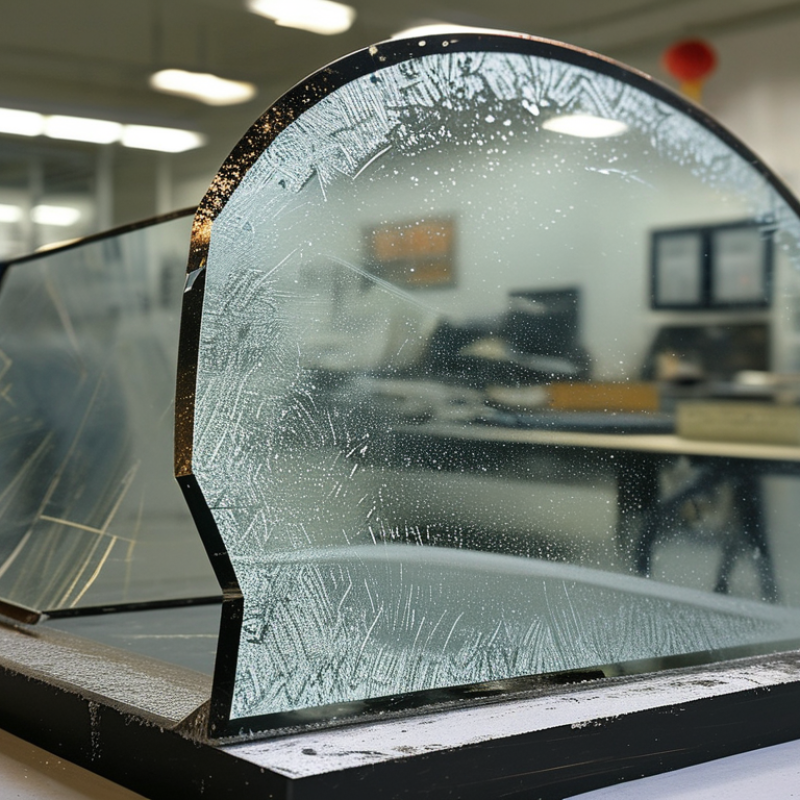
An AG (anti-glare) cover lens is the clear front layer over a display. Its surface reduces sharp reflections from lamps, windows, and sunlight. Manufacturers create this effect through microscopic texturing, chemical etching, or a controlled matte coating. Instead of bouncing light like a mirror, the surface spreads it across wider angles. The screen becomes easier to read. Not perfectly clear? Slightly softer images may appear, especially on fine text. This is the key trade-off.

A reliable Chinese manufacturer should control glass strength, surface roughness, coating thickness, and touch sensitivity together. During production, technicians inspect haze, gloss, particles, scratches, and edge chips under consistent lighting. They also test repeated touch input, cleaning chemicals, humidity, and temperature changes. Small defects matter. A lens can pass appearance checks yet create uneven glare outdoors. In my view, sample approval should include real use, not only a laboratory image.

When comparing top AG cover lens manufacturers in China, buyers should request measured haze and gloss values, dimensional tolerances, adhesive compatibility, and traceable inspection records. Ask whether the supplier can support custom sizes, curved glass, holes, black borders, and low-reflection areas. These details reveal process maturity more clearly than a polished sales page. No AG surface performs perfectly in every environment. A darker room, bright office, and moving vehicle can produce different results. That uncertainty deserves honest testing before volume production.

What Standards Define High-Quality AG Cover Lens Manufacturers?

When evaluating top AG cover lens manufacturers in China, buyers should inspect measurable standards, not showroom claims. A reliable supplier documents optical haze, light transmittance, gloss, and surface uniformity for every batch. These figures must match the drawing and display environment. For touch panels, the lens should pass hardness, abrasion, adhesion, and chemical-resistance tests. A clear test report matters. One report is not enough.

Quality manufacturers usually operate documented systems aligned with ISO 9001. Product testing should follow relevant optical, coating, and environmental methods. Ask for calibration records, sampling plans, and full material traceability. During a factory audit, inspect cleanroom discipline, edge finishing, coating thickness, and inspection lighting. Tiny dust particles may become visible after assembly. That detail is easy to underestimate.

Experience appears when engineers handle difficult specifications. They should explain haze variation, ink color shift, curvature limits, and bonding risks clearly. Strong suppliers provide pilot samples, capability data, and corrective-action records. They should test humidity, temperature cycling, and repeated wiping before mass production. Still, no manufacturer is flawless. Certificates cannot replace independent sample verification. Compare samples under office light, sunlight, and angled viewing conditions before approval. Surface appearance can change more than expected.

What Are the Top AG Cover Lens Manufacturers in China? - What Standards Define High-Quality AG Cover Lens Manufacturers?

Evaluation Dimension Typical Requirement for a High-Quality AG Cover Lens Manufacturer Relevant Standard or Test Method Evidence Buyers Should Request Importance
Quality management system A documented and audited quality system covering incoming materials, production, inspection, traceability, nonconforming products, and corrective actions. ISO 9001; in China, GB/T 19001 is aligned with ISO 9001. Valid certificate, certification scope, audit status, quality manual, and recent corrective-action records. Critical
Optical performance Stable visible-light transmission, controlled haze, uniform anti-glare texture, and no unacceptable optical distortion or visual nonuniformity. ASTM D1003 or ISO 13468 for luminous transmittance and haze; customer-approved optical specifications. Lot-based transmission and haze reports, sampling plan, calibrated haze meter, and approved visual standards. Critical
Anti-glare surface control Consistent micro-texture or coating across the active area, with controlled reflection and glare reduction suitable for the intended display environment. Gloss measurement commonly uses ASTM D523; final limits should be defined by application and viewing conditions. Gloss readings at an agreed geometry, surface-uniformity maps, approved samples, and appearance inspection criteria. Critical
Abrasion resistance The AG layer or textured surface should retain acceptable optical and visual performance after repeated contact or cleaning. ASTM D1044 Taber abrasion or an equivalent customer-approved abrasion procedure. Before-and-after haze, gloss, and appearance data; wheel, load, cycle-count, and conditioning details. Critical
Coating or ink adhesion Printed borders, functional coatings, and decorative layers should remain bonded after handling, cleaning, and environmental exposure. ASTM D3359 cross-cut adhesion; the exact rating requirement must be agreed for the coating system. Cross-cut results, coating lot traceability, surface-treatment parameters, and failure photographs when applicable. High
Chemical and cleaning resistance Resistance to approved cleaning agents, skin oils, mild detergents, and other chemicals expected during product use. Customer-defined chemical-resistance protocol; ASTM D543 may be used as a reference for plastics. Chemical list, concentration, contact time, temperature, visual rating, optical retest, and dimensional inspection. High
Environmental reliability The lens should maintain adhesion, appearance, dimensions, and optical performance after humidity, temperature cycling, and thermal exposure. IEC 60068 environmental test methods; test conditions depend on the product application. Pre- and post-test inspection, optical measurements, temperature and humidity profiles, and failure-analysis records. Critical
Dimensional accuracy Stable length, width, thickness, corner radius, hole position, flatness, and edge quality within drawing tolerances. Customer engineering drawing; ISO 2768 may be referenced for general dimensional tolerances where applicable. Coordinate-measuring-machine reports, first-article inspection, capability studies, and gauge-calibration records. Critical
Material and safety compliance Substrates, coatings, inks, adhesives, and packaging materials should meet applicable restricted-substance and market-entry requirements. RoHS, REACH, and customer-specific restricted-substance requirements; UL recognition may apply to selected polymer materials. Material declarations, supplier compliance statements, third-party laboratory reports, and change-control records. Critical
Process capability and traceability Controlled cleaning, forming, printing, coating, curing, inspection, and packaging processes with traceability from raw material to shipment. ISO 9001 process controls; statistical process control and first-article inspection are widely used industry practices. Process flow chart, control plan, equipment list, maintenance records, lot coding, yield data, and change-notification procedure. Critical
Production scalability The supplier should demonstrate repeatable pilot production and a documented path to volume production without changing critical optical or cosmetic performance. Customer qualification plan, run-at-rate evaluation, and agreed yield and capacity targets. Pilot-lot results, equipment capacity, staffing plan, bottleneck analysis, yield trend, and business-continuity plan. High
Testing independence Internal laboratories should use calibrated equipment, while critical qualification results should be confirmed by competent independent laboratories when required. ISO/IEC 17025 is the principal competence standard for testing and calibration laboratories. Laboratory scope, calibration certificates, test-method validation, measurement uncertainty, and accredited external reports. High

Note: AG cover lens acceptance limits vary by substrate, display application, viewing environment, and customer drawing. The standards listed above provide recognized test frameworks; they do not replace a product-specific qualification specification.

Which Chinese Companies Lead the AG Cover Lens Industry?

China’s AG cover lens industry is led by manufacturers with strong optical processing and surface-treatment capabilities. The most competitive companies usually operate near major display and consumer-electronics clusters. They combine glass cutting, CNC shaping, chemical strengthening, and anti-glare coating under controlled production lines.

Factory experience matters. During supplier evaluations, buyers often inspect coating uniformity under angled light, not only under showroom conditions. Leading producers maintain stable haze levels, smooth edges, and consistent thickness across large batches. They also provide inspection records, sample traceability, and practical support during product development. These details separate capable manufacturers from low-cost processors.

Specialized cover-lens companies often lead high-volume projects because they understand touch sensitivity, fingerprint resistance, and optical clarity together. Some larger display-component manufacturers also perform strongly, especially when customers need tight integration with modules. However, company size can create slower communication. That weakness is easy to overlook. Smaller technical manufacturers may respond faster, yet their quality systems require closer verification. Buyers should compare coating durability, rework rates, lead times, and testing methods before choosing a Chinese supplier. A good sample is not enough. Production consistency matters more.

How Do China’s AG Cover Lens Manufacturers Compare?

China’s leading AG cover lens manufacturers differ less by polished brochures and more by measurable production control. A serious comparison should examine haze, gloss, surface hardness, edge quality, and touch sensitivity. These details affect reading comfort under office lighting and sunlight. Ask for test reports from the same production batch. One sample proves very little.

Manufacturers with strong engineering teams usually offer several AG textures, customized glass thicknesses, and stable optical performance across large panels. Their factories may combine chemical strengthening, precision printing, CNC edging, and clean-room lamination. Quality systems matter too. Check inspection frequency, traceability records, coating durability tests, and rework procedures. Delivery reliability deserves equal attention. A low quotation can hide weak packaging, unstable yields, or expensive replacement claims. No supplier is perfect. Even experienced buyers sometimes overvalue price and underestimate coating consistency.

Tips: Request at least three samples with different haze levels. Test fingerprints, glare, color shift, and touch response under real lighting. Confirm minimum order quantities, sample fees, tooling ownership, and warranty terms in writing. Visit the production site when possible, or arrange a live video inspection. Also, compare pilot-run results rather than trusting a single laboratory sheet. A supplier may pass a test yet struggle during mass production. That gap needs careful questioning.

What Factors Should Buyers Consider When Choosing a Manufacturer?

What Factors Should Buyers Consider When Choosing an AG Cover Lens Manufacturer?

A practical audit should begin with optical performance, not a polished showroom sample. Ask for measured haze, gloss, transmittance, surface roughness, and pencil hardness. ASTM D1003 provides recognized methods for haze and luminous transmittance testing. These figures should match the final drawing and coating structure. A sample can look excellent under soft lighting, yet show visible glare beside a window.

Production consistency matters just as much. Request batch records, coating thickness limits, inspection frequency, and defect classification rules. IEA PVPS reported more than 400 GW of new solar capacity in 2023, showing how quickly glass and lens supply chains are scaling. Capacity alone proves little. Buyers should verify actual monthly output, yield, backup equipment, and corrective-action records. A factory tour helps, but remote evidence is still imperfect.

Durability testing deserves equal attention. ISO 4892 weathering methods can support evaluation under ultraviolet exposure, heat, and moisture. Ask for test duration, chamber conditions, and independent laboratory reports. Also examine edge quality, dimensional tolerance, adhesive compatibility, packaging, and traceability. The 2024 World Bank Logistics Performance data highlights how delivery reliability remains a serious supply-chain issue. Therefore, compare confirmed lead times with historical shipping records, not promises. The cheapest quotation may hide unstable yields, weak packaging, or costly rework. Reflect on that before signing.

Article Source:

Go to Top