Why Do Hotels Use DND Signs?
A quiet knock can feel surprisingly intrusive when a guest is resting, working, or recovering from a long journey. That small card on the door handle has a practical purpose. Hotel Dnd Signs tell housekeeping and other hotel staff that a guest does not want to be disturbed at that moment. The message is simple, but it helps set a clear boundary without requiring a conversation.
For hotel teams, the sign can guide room-cleaning schedules and reduce unnecessary interruptions. A housekeeper seeing it outside a room can move on and return later, according to the property’s procedures. Guests may use it during a nap, a business call, or a slow morning with coffee beside the window. Small detail. Real comfort. Still, a DND sign is not a perfect communication system. Staff may need to follow hotel procedures if a sign remains on the door for a long time, and guests should not assume it replaces every kind of assistance or safety check. Practices can differ between hotels, so the information provided at check-in matters.
Understanding why hotels use DND signs also reveals how hospitality balances privacy with attentive service. The sign helps guests control when routine visits happen, while giving staff a visible cue to respect that choice. It may seem like a minor card, and perhaps hotels could explain its use more clearly. Yet its meaning is easy to recognize: please give me space for now.
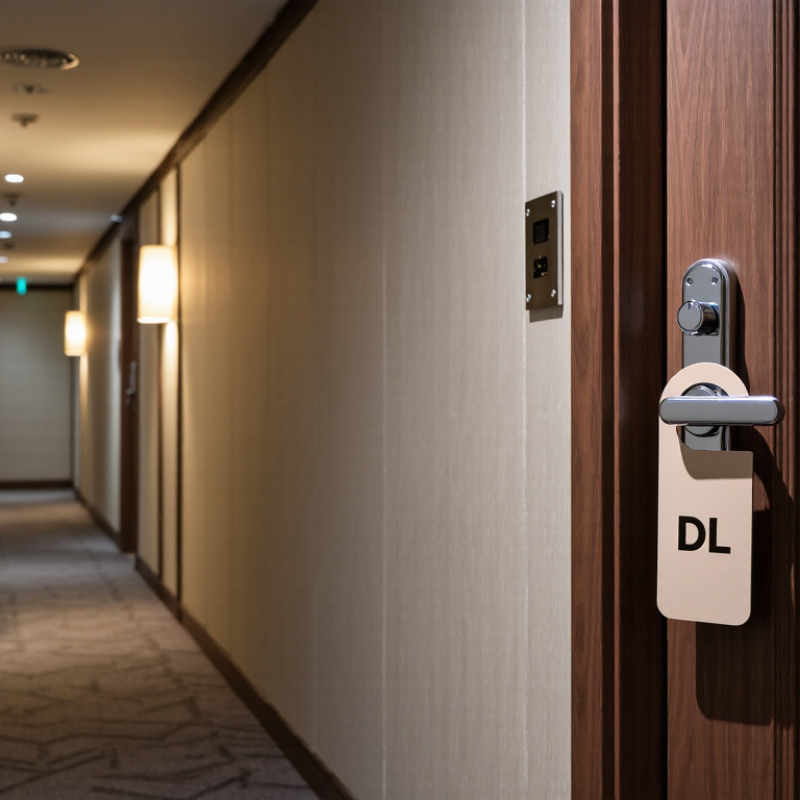
What a Do Not Disturb Sign Means in a Hotel
A Do Not Disturb sign tells hotel staff that a guest would prefer not to be interrupted. Hung on the outside door handle, it usually means housekeeping should skip routine cleaning and avoid knocking. The request may also apply to other non-urgent visits, such as a delivery or maintenance check. Exact procedures can vary by hotel.
Small details matter. A cleaner wheeling a cart down the hallway may see the sign before reaching the door, while a guest inside may be sleeping, working, or simply taking a quiet break. The sign does not always cancel every service. Guests can contact the front desk to request towels or arrange a suitable time for room cleaning. Some hotels also explain how long a sign can remain displayed or what staff will do if they cannot reach a guest.
It is a simple signal, but not a perfect one. Staff might miss it, or a guest might forget to remove it after leaving. If you need privacy, place it clearly on the handle and check the room information for the hotel’s specific policy. For a safety concern or urgent issue, staff may still need to check on the room. That can feel intrusive, even when the sign is visible.
Why Do Hotels Use DND Signs? What a Do Not Disturb Sign Means in a Hotel
How DND Signs Communicate Guest Preferences
Why Do Hotels Use DND Signs?
How DND Signs Communicate Guest Preferences
A Do Not Disturb sign turns a quiet preference into a clear message. Hung on a door handle, it tells housekeeping staff to pause before entering. That matters during a nap, a private phone call, or a slow morning when a guest simply wants the room left alone. The sign also helps reduce awkward knocks and interruptions. Small signal, practical effect. Guests can remove it when they are ready for service, though the timing is not always obvious.
Clear signals support hotel operations, too. The American Hotel & Lodging Association’s 2023 staffing survey found that 82% of responding hotels reported staffing shortages. When teams are stretched, visible guest preferences can help staff plan room visits and avoid repeated attempts. Still, a DND sign does not explain every need: a guest may want towels without a full room cleaning, for example. Some hotels offer additional ways to request service, but signs remain familiar and easy to use. They are not perfect. A sign can be missed, left up by accident, or misunderstood, so staff should follow hotel procedures and use considerate judgment.
A Do Not Disturb sign communicates a request to pause routine room entry. Staff typically defer housekeeping and other non-urgent visits; guests can remove the sign or contact the front desk when they are ready for service. These are common operational responses, not measured frequency data.
Why Hotels Use DND Signs for Privacy and Rest
A “Do Not Disturb” sign gives hotel guests a simple way to request privacy without needing to answer the door. After a late arrival, a long journey, or an early start, even routine housekeeping can interrupt needed rest. A card on the handle communicates the guest’s preference clearly to staff passing along the corridor.
The sign also helps housekeeping plan room visits. When staff see it, they can usually skip that room and return later, following the hotel’s procedures. That small pause can matter: a guest may be sleeping, taking a private call, or simply enjoying a quiet morning. No explanation is required. The message is brief.
DND signs are useful, but they are not a perfect communication system. A guest might forget to remove one, or a hotel may have separate procedures for important service or safety concerns. Policies differ, so guests can check the information in their room or contact the front desk if they need assistance. And staff should respect the sign while using good judgment. That balance is not always effortless. Still, the sign gives guests a practical way to set a boundary, and it helps hotel teams avoid unnecessary interruptions.
How DND Signs Shape Housekeeping and Staff Access
A “Do Not Disturb” sign is more than a request for quiet. It tells housekeeping staff to pause before entering, even when a room appears ready for service. A cart may wait outside while a guest sleeps, takes a call, or leaves personal belongings spread across the bed. That pause protects privacy and helps staff avoid an awkward interruption. It also changes the workday: attendants may need to return later, adjust their room sequence, or report an unresolved room to a supervisor. Small signal, real consequences.
Staffing pressure makes clear communication especially important. In its 2023 staffing survey, the American Hotel & Lodging Association reported that 82% of surveyed hotels had staffing shortages, with 26% describing them as severe. The figures do not prove that DND signs cause delays, but they show why wasted trips matter. A clear sign can prevent an unnecessary knock; a sign left up for hours can leave a room unserviced and complicate shift planning. Hotel procedures should explain how staff record unanswered rooms, when they may check again, and how urgent maintenance concerns are handled. The details vary by property. And signs are imperfect: a guest may forget to remove one, while a quiet room may simply be empty. Good judgment still matters.
When Hotel Staff May Need to Check a DND Room
Why Do Hotels Use DND Signs?
A Do Not Disturb sign tells hotel staff that a guest wants privacy. It helps prevent routine interruptions, such as housekeeping visits or towel replacement. Still, the sign is not a reason to ignore every concern behind a closed door.
Staff may need to check a DND room when there is a credible safety concern. For example, a smoke alarm may sound, water may seep beneath the door, or a guest may call for help. A staff member who hears a fall or repeated calls should alert a supervisor and follow the hotel’s response procedure. In urgent situations, waiting for the guest to remove the sign could make matters worse.
Less urgent checks require care. If a DND sign remains up for an unusually long time, staff should follow the property’s established welfare-check process rather than entering on a whim. That may mean calling the room, knocking, announcing themselves, and involving a supervisor. The exact timing can vary, so staff should rely on clear hotel procedures, not guesswork. A knock may go unanswered for an ordinary reason. Even so, a brief, documented check can help balance privacy with guest well-being.
FAQS
It asks housekeeping to pause before entering. A card on the door handle can prevent an unexpected knock.
A guest might use it while sleeping, taking a private call, or enjoying a quiet morning. No explanation is needed.
Staff can skip the room and plan another visit. It may also prevent a wasted trip, though schedules can still shift.
No. Hotel procedures may cover important service or safety concerns. Guests can check the room information or contact the front desk.
Remove the sign from the handle. If towels are needed without room cleaning, ask the front desk about available options.
Yes. If it stays up by accident, the room may remain unserviced. It is easy to forget.
A 2023 survey reported staffing shortages at 82% of responding hotels. Clear signs may help teams avoid repeated attempts, but they do not solve every scheduling problem.
They should respect it and follow property procedures. If a room remains unavailable, staff may need to record it or return later.
Not necessarily. A guest may have left the sign up by mistake, or the room may be empty. Staff still need judgment.
Conclusion
Hotel DND signs, or “Do Not Disturb” signs, let guests tell hotel staff whether they would like privacy, quiet, or service. Hung on a guest-room door, a sign can communicate a preference without requiring a conversation. Guests may use it while sleeping, working, relaxing, or simply wishing not to be interrupted. These small signs help make room access and service requests clearer for both guests and staff.
For housekeeping teams, a DND sign is an important cue to pause routine visits and respect the guest’s stated preference. Staff can follow the hotel’s procedures for noting rooms that were not serviced and arranging another suitable time. A sign does not always mean staff will never need to check on a room; specific operational concerns may call for a response in accordance with hotel policy. Overall, Hotel DND Signs support guest comfort, privacy, and more considerate
| Sign or Status | What It Usually Means | Typical Hotel Response | Helpful Guest Guidance |