10 Bathroom Renovation Tips for Global Buyers
A bathroom renovation is rarely just a cosmetic upgrade. For global buyers, it combines design, plumbing, ventilation, accessibility, climate, and local construction standards. A beautiful wall-mounted toilet may fail when water pressure is weak. A natural-stone floor may suffer in a humid coastal climate. Small decisions become expensive quickly.
Houzz’s 2024 U.S. Bathroom Trends Study reported a median spending of $35,000 for major bathroom remodels and $15,000 for minor projects. These figures are not universal price lists. Labor rates, import duties, exchange rates, and material availability vary widely between countries. The National Kitchen & Bath Association also continues to highlight wellness, universal design, improved storage, and water-efficient fixtures as major bathroom priorities. Buyers should measure twice. Even that may not be enough.
Bathroom designer Barbara Sallick describes the bathroom as “the hardest-working room in the house.” Her observation explains why planning matters more than decoration. A renovation needs a realistic budget, a qualified local team, tested waterproofing, and clear product specifications. It also needs humility. Digital images can hide uneven walls, poor drainage, and difficult maintenance. On real projects, the most attractive material is not always the most practical choice. This guide explores ten bathroom renovation tips for international buyers, from choosing climate-appropriate finishes to checking after-sales support. The aim is not perfection. It is a safer, clearer, and more durable decision.
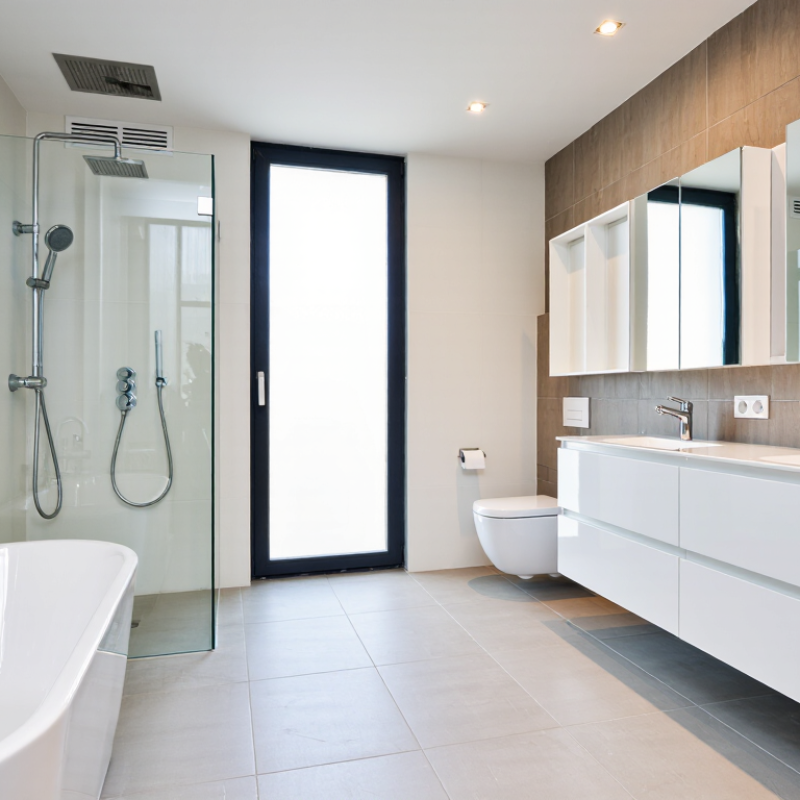
Assess Layout Safety: Keep 30–36 Inches of Clear Bathroom Floor Space (NKBA)
A safe bathroom layout begins with clear floor space, not beautiful fixtures. Planning guidance from the National Kitchen and Bath Association recommends keeping about 30–36 inches of unobstructed floor space. Measure the walking zone in front of the toilet, vanity, shower, and tub. A tape measure helps. So does a full-size cardboard template.
Leave enough room for a person to turn, dry off, and open a door without collision. In a compact bathroom, a wall-hinged door may work better than a swinging door. Consider sliding doors carefully; their tracks can collect water and dust. Keep towel bars outside the main route when possible. Wet towels near the floor can become a slipping hazard. Small details matter.
Global buyers should verify local building and accessibility rules before construction. The 30–36-inch guideline is useful, but it may not replace regional requirements. Ask a qualified designer or contractor to check plumbing locations, electrical clearances, ventilation, and structural walls. I have seen layouts look spacious on paper but feel tight after a vanity is installed. That mistake is expensive. Leave a little extra room if the budget allows. Real bodies are not perfectly measured, and bathrooms rarely stay perfectly tidy.
10 Bathroom Renovation Tips for Global Buyers
Assess Layout Safety: Keep 30–36 Inches of Clear Bathroom Floor Space
A safe bathroom layout should preserve at least 30 inches of unobstructed floor space, with 36 inches providing more comfortable movement and better accessibility. Measure the usable clearance between fixtures, walls, doors, and other permanent obstacles before finalizing the renovation plan.
Set Global Water Standards: Choose Toilets Using 1.28 Gallons per Flush (EPA)
For global bathroom renovations, water efficiency should begin with the toilet.
The U.S. Environmental Protection Agency uses
1.28 gallons per flush
as an important efficiency benchmark. This equals about 4.8 liters. A toilet using this volume can reduce household water consumption without sacrificing practical performance.
Check the flush rating before purchasing.
Some models list a maximum volume, while dual-flush models offer different settings. Read the full specification sheet, not only the product photograph. Bowl shape, trapway design, drain size, and water pressure can affect results. A low-flow toilet may perform poorly if the building has weak pressure or an unsuitable waste line. That detail is easy to miss.
Measure the bathroom carefully.
Confirm the rough-in distance, supply connection, seat height, and available clearance. Regional plumbing rules may differ, so local approval still matters. The 1.28-gallon figure is a useful EPA reference, not a universal legal requirement. Ask a qualified installer to test flushing and check for leaks after fitting. I once assumed a water-saving model would suit every property; that assumption was too simple. Efficiency matters, but reliable daily use matters too. Test the handle, refill noise, and bowl cleanliness before the renovation is considered complete.
Plan Efficient Ventilation: Target 8 Air Changes per Hour in Wet Areas (ASHRAE)
10 Bathroom Renovation Tips for Global Buyers
Plan Efficient Ventilation: Target 8 Air Changes per Hour in Wet Areas (ASHRAE)
Moisture control should shape your bathroom design from the beginning. An 8 air changes per hour target can support faster drying in wet areas. However, it is not a universal legal requirement. ASHRAE Standard 62.2-2022 specifies local bathroom exhaust rates, including 50 cubic feet per minute for intermittent operation. Confirm the local code before finalizing equipment. Real bathrooms behave messier than drawings. Steam gathers around mirrors, ceiling corners, and poorly sealed windows. A small room may still need strong, well-positioned extraction.
Tips: Calculate airflow from room volume, not floor area alone. For example, a 6 m³ bathroom needs about 48 m³/h for 8 ACH. Use a timer or humidity sensor after showers. Provide replacement air through a door undercut or transfer grille. Keep duct runs short, smooth, and accessible for cleaning. This practical step is often missed during renovation.
The U.S. Environmental Protection Agency reports that indoor pollutant levels can be two to five times higher than outdoors, and sometimes much higher. Persistent humidity also increases condensation and mould risk, especially in cool climates. I would not treat 8 ACH as a magic solution. Fan noise, blocked ducts, and poor commissioning can defeat a good calculation. Test airflow after installation, measure humidity during a real shower, and record the result for future maintenance. These details offer global buyers stronger evidence than a product label alone.
Select Durable Materials: Limit Tile Water Absorption Below 0.5% (ANSI)
Bathrooms endure daily splashes, steam, cleaning chemicals, and sudden temperature changes. Durable materials reduce repairs, especially in homes facing humid climates.
Choose tiles with water absorption below 0.5%, as specified for porcelain tile under relevant ANSI standards. Low absorption helps limit moisture penetration through the tile body. It does not make the entire wall waterproof. Proper membranes, sealed joints, and careful installation still matter.
Ask the supplier for test data, not only the word “porcelain.” Check the product’s technical sheet and confirm the testing standard. A dense tile can still fail when installers leave gaps behind it. I have seen beautiful bathrooms develop loose tiles after water reached weak adhesive coverage. The problem was not the tile alone.
Inspect tile edges for chips before installation. Use matching grout suited to wet areas, and leave movement joints near corners and changes in plane. Large tiles create fewer joints, but they demand flatter surfaces and more accurate cutting. That trade-off is easy to underestimate.
For international purchases, confirm slip resistance, frost performance, and maintenance requirements with local professionals. Climate, building codes, and installation methods vary widely. My own preference has changed over time: low absorption is essential, but realistic installation planning matters just as much.
Control Renovation Value: Compare Costs Against a 73.7% Midrange ROI (NAR)
10 Bathroom Renovation Tips for Global Buyers
Bathroom renovation value depends on disciplined spending, not expensive decoration. The National Association of Realtors’ Remodeling Impact Report places midrange bathroom renovation cost recovery at 73.7%. Treat this as a benchmark, not a promise. Local labor, property type, currency, and buyer preferences can change the result. Houzz’s 2024 U.S. Bathroom Trends Study reports a median major-remodel spend of about $35,000. Set a clear scope, compare at least three detailed quotes, and keep existing plumbing where practical. Moving pipes often consumes value quickly.
Choose durable, easy-clean surfaces. Prioritize waterproofing behind every wet area. Confirm ventilation capacity before selecting finishes. Improve lighting with layered, shadow-free fixtures. Add storage without reducing movement space. Select neutral materials, but keep one personal detail. It may photograph well. It may not suit every market. That is worth questioning.
Check local permits, electrical rules, drainage requirements, and accessibility expectations. International buyers should ask a qualified local surveyor to review moisture risks and construction quality. Reserve 10% to 20% for hidden damage, especially in older buildings. Keep invoices, product specifications, inspection records, and dated photographs. These documents support future resale discussions. NAR’s figures reflect a broad U.S. market, not every country. A 73.7% recovery rate cannot justify weak workmanship, poor ventilation, or an oversized luxury fit-out. Spend where buyers can see and inspectors can verify.